
_
The challenge of precision in industrial stevedoring
Today, the viability of industrial export depends on the ability to integrate technical data into processes that were previously purely operational. Detecting inefficiencies in cargo configuration has become a strategic priority; optimizing these flows not only cuts direct costs, but stabilizes customer service and strengthens the company’s position in foreign markets.
This paradigm shift places load planning as a direct cost control axis, and not as a mere warehouse procedure. In this scenario, the digitization of stowage through load planners emerges as the necessary tool to convert volumetric data into tangible logistics savings.
_
Operational uncertainty: the risk of manual planning
Load planning based on intuition or basic spreadsheets creates a critical gap between theory and practice.
The main problem lies in the lack of predictability: not knowing the exact disposition of the goods until the time of physical loading often results in unplanned partial shipments, overweight on specific axes and systematic underutilization of the contracted volume.
This inefficiency not only increases the cost per unit transported, but also makes coordination with carriers more difficult and increases the risk of damage during transit due to inadequate stowage.
_
Digitalization applied to cargo
Traditionally, load planning was done manually or with simple methods that offered little visibility and flexibility. The use of specific technology makes it possible to project the configuration of packages in containers or pallets virtually. By validating the feasibility of the shipment prior to physical execution, the company gains predictability and minimizes set-up times at the dock.
An example of this approach is EasyCargoa digital tool for load planning and optimization that maximizes the use of space and facilitates decision-making prior to the start of the physical operation.
_
Digitize to optimize
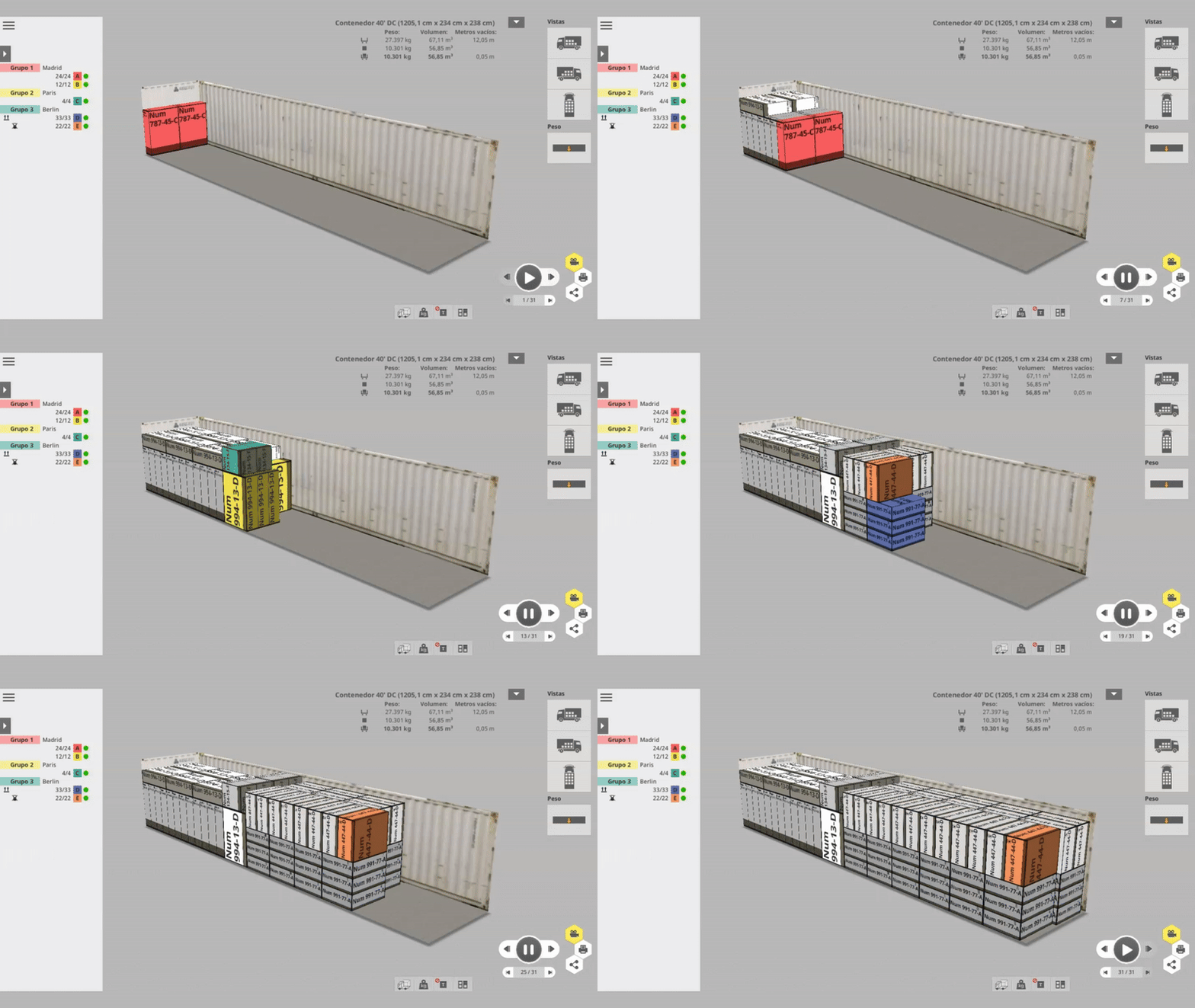
The solution is not to “digitize for the sake of digitizing”, but to use tools that solve the transport geometry. In the case of EasyCargo, it is not just a matter of obtaining a 3D vision, but of operating as a load calculation tool with impact in three critical areas:
- Reduced dead space: Automatic cubing increases unit load density, allowing such accurate volumetric planning that the need for additional shipments due to initial miscalculations is minimized.
- Distribution preview: The software calculates the optimal load placement, allowing to keep errors under control and prevent accidents due to overloading.
- Clear loading reports: When creating your loading plan you can share both the 3D view of the loading plan and the detailed reports, via link, pdf or excel.
_
Benefits of digital load planning
_
The main benefits associated with the digitization of cargo management are:
- Improved space utilization, with increases of up to 15% in available capacity, especially relevant for low unit value products.
- Faster and easier loading, requiring fewer personnel and reducing reliance on individual expertise.
- Increased operational safety by anticipating and planning product disposition.
- Prevention of overloads in axles and transport units, reducing sanction and maintenance risks.
- Reduction of redundant loads, with positive impact on fuel consumption and environmental footprint.
- Improved collaboration with customers by being able to share load plans in a visual and structured way.
- Increased product protection, considering specific restrictions such as commodity compatibility or special transport conditions (temperature, fragility, etc.).
In conclusion, the digitization of freight management is a technical response to today’s logistical volatility. Integrating planning tools not only protects operating margins against unforeseen events, but also professionalizes the export and import chain in a highly demanding regulatory environment.


