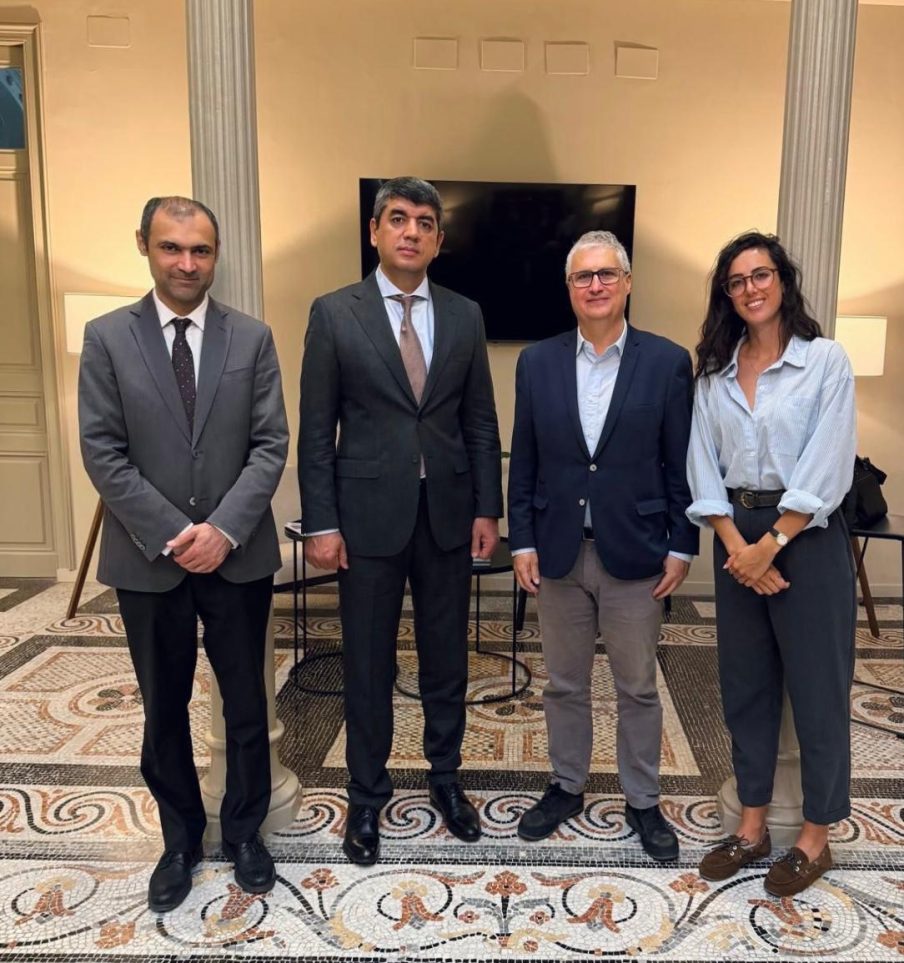


At the April 28 meeting between our Deputy Director General Diego Guri and Tajikistan’s Ambassador to Spain, Sharaf Sheralizoda -resident in Geneva-, it became clear that this Central Asian country is an open door for Spanish companies wishing to expand their borders.
It is a modest territory of about 143,000 km², with 10.6 million inhabitants and a young and dynamic labor force: more than 70% is under 35 years old. The average salary is 250-300 euros per month, and its GDP is growing at a good pace, with 8.4% last year and expectations of 7% this year, according to World Bank data.
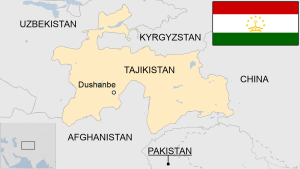
It borders Uzbekistan, Kyrgyzstan, China and Afghanistan, placing it at the historic heart of the Silk Road and modern routes such as the Middle Belt and Road Corridor, a rail logistics hub linking China to Europe via Kazakhstan, the Caspian, Azerbaijan and Turkey.
Also, despite the effects of the current global conflict, which has reduced remittances by 25% and strained regional trade, they maintain solid macroeconomic stability with inflation controlled at 3.8% in 2025 and international reserves at historic highs of USD 4.5 billion (World Bank, 2025). Foreign direct investment is growing: from USD 350 million in 2023 to USD 459 million in 2024, a 31% increase, according to UNCTAD.
Tajikistan is at a key moment of international opening, with expectations of solid growth in most productive sectors, although in our meeting some of them gained special prominence due to their strategic urgency:
On the one hand, the country aspires to achieve energy self-sufficiency through a firm commitment to renewable energies, particularly photovoltaic and wind power. During the meeting, they highlighted the consolidated Spanishknow-how in these fields and showed special interest in collaborating with pioneering Spanish companies in the sector.
No less important is its mineral wealth: in a compact territory there are significant reserves of aluminum, antimony, gold, silver, iron, lead and rare earths (currently in high demand). However, they lack the industrial capacity to process them, which creates opportunities for companies specialized in engineering, industrial equipment, production processes and the development of complete value chains. In this area, the relevance of chemical processes in the treatment of minerals, a key element for the efficient use of resources such as rare earths, has been particularly emphasized.
Finally, but of vital importance, cotton as a historical pillar of its agrarian economy. They currently export around 250 million dollars, but their ambition is to recover -and surpass- the levels of the Soviet era, which were around 500 million or more, by means of an integral modernization of production. This drive is necessarily linked to the development of the textile industry, where the ambassador stressed the strong need to incorporate European technology. In this sense, projects for the acquisition of Italian and Swiss machinery have already been carried out, supported by bilateral financing, as an example of the path the country is seeking to consolidate.
They offer a competitive incentive framework that facilitates the entry of foreign investors: a moderate corporate tax rate of 18%, specific VAT and customs exemptions for renewable projects, full freedom to repatriate profits and dividends without exchange restrictions, as well as free trade agreements with CIS (Commonwealth of Independent States) countries that eliminate tariffs on more than 90% of industrial and agri-food goods.
The new Investment Law of 2025, recently approved, reinforces these guarantees with fiscal stabilization contracts for up to 10 years, protection against expropriation.
Key multilateral mechanisms include the Asian Development Bank (ADB), which finances credit lines in some sectors, and the European Investment Bank, which has already committed 100 million euros to modernize transport infrastructure in 2025-2026.
Similarly, for investment projects, they require, in most cases, a minimum FDI of US$5 million, although exceptions apply.
Finally, we were consulted specifically on Spanish tourism models, with the clear intention of adapting them to develop their hotel offer, complementary services and a nascent industry that takes advantage of their natural and cultural heritage. It is a clear opportunity not only for our engineering and agribusiness companies, but for the entire ecosystem.
Overall, the meeting confirmed that Tajikistan is in an opening phase with opportunities for Spanish companies. In addition to the sectors already mentioned, areas such as automation, smart grids, food technology, water sanitation and irrigation should also be highlighted. In this context, amec has established a direct line to the country, and the Ambassador has offered to facilitate contact with counterpart business organizations, remaining at the disposal of any interested partner company.