
Sharing Artificial Intelligence use cases

March 24, 2026

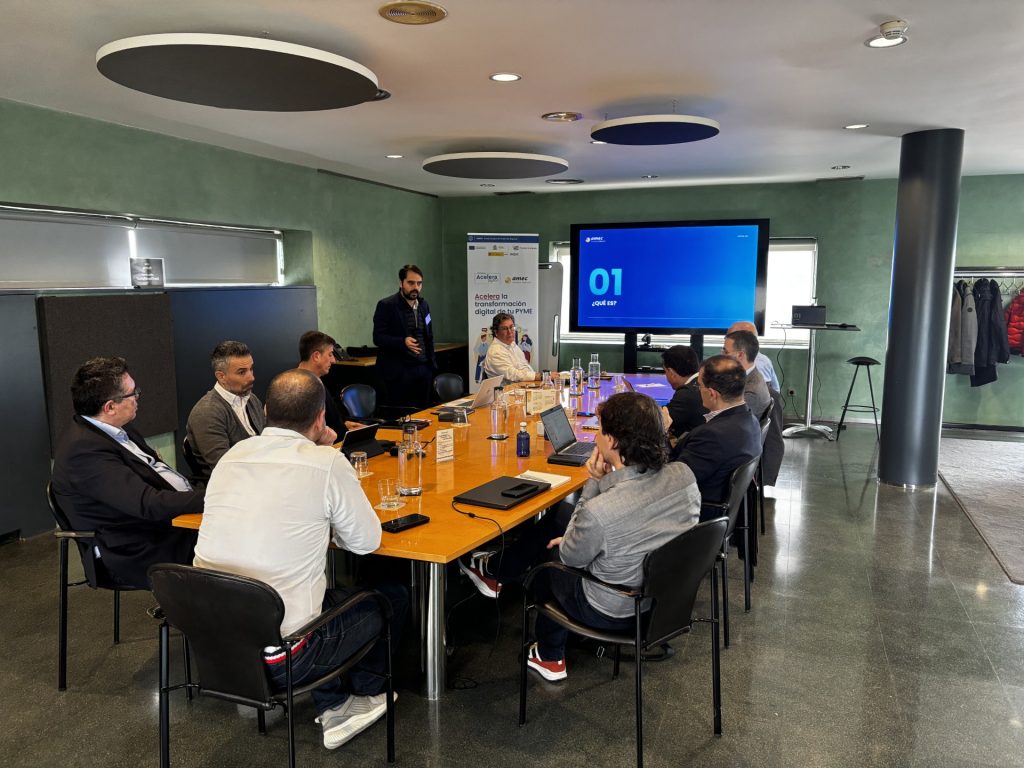
The Technical Innovation Committee met to analyze the use of Artificial Intelligence (AI) in day-to-day business. Seventeen use cases in 3 companies were presented:

  • Invoice management. The company had already automated some issues with Power Automate, which works well with structured data, but in an unstructured pdf it was not possible to automate. With Gemini they receive the pdfs in a mail, a system reads them, identifies the supplier, makes a match with the ERP lines and automatically updates the ERP if everything is OK. If not, it sends a summary with the difficulties (e.g. price discrepancies, long delivery dates). In the end, team hours are freed up. Another company comments that it has had problems with the pdfs to do something similar with Chat GPT. The solution is to adapt the prompt according to the supplier.
  • Salesperson reports. The salesperson gives a verbal summary of the meeting, the AI(Gemini) transcribes the audio, analyzes the content, identifies themes, tasks, sentiments and structures information. Finally a complete and detailed report is generated, ready to be reviewed, shared and stored in the CRM. It adds an executive summary of all visits with the customer. In the discussion it is commented that they are considering recording with the client during the meeting (for now it is not done due to cost, and possible reluctance of the client). It was pointed out that, although it is legal, it is essential to warn the client due to a confidence building issue.
  • Project to analyze purchasing, which improves the entire process. There is a debate about replacing the person by an agent, especially in products that are commodities, of rotation, not so much in technological products. It would be an improvement for dynamic cases of dynamic stocks.
  • Search engine for potential clients and people (with ai, the websets part), it searches for people of potential clients. It is not a database, what it does is to convert the web into a database. With a prompt with some criteria, incorporating the desired columns. It searches the web and sorts by matching criteria. They charge for results.
  • Customer database, with Google Sheets or Excel with Copilot, asking for what you want (with the prompt and the cell or range of cells).
  • Customer presentations and characterizations: with Notebooklm, you can make presentations, mental maps of processes, presentations by voice. It allows to know a customer. Helps to train sales people in more technical products.
  • Remote technical reports from installers for machine start-ups. Voice report by whasapp, to generate a report via AI. A script is given. It has been going on for months and they are improving. They get a basic daily report of how the machine is at the customer’s home.
  • ERP integration: advanced product autocompletion with integration with an API in Chat GPT, including translations for multilingual offerings
  • Generation of descriptive texts by extracting information from various sources, centralizing it, processing it, and making it available to various user profiles.
  • Creation of knowledge databases, helping to complement information sources: databases of visitor flows through data flows from telecommunication companies. Problem with the cost of data. Balance must be sought
  • Redesign of a documentation search engine using natural language and a very intuitive visualization. It allows to speed up the document search
  • Creation of an agent that provides technical information from user manuals to the users of a machine.
  • Visitor flow modeling and optimization to optimize the seating capacity of an entertainment venue.
  • Automation of e-mail management with press releases to redirect it to the person in charge of each area.
  • News data space to see possible contradictions in public statements in a news agency
  • Data governance project: define internal policies within a company of 3,000 employees, including responsibilities, strategies and protocols for action so that the information serves the company’s business.
  • Trusted AI project, using AI to make the company more secure (cybersecurity). Project to analyze the quality of information, see the bias and see what information is really reliable, in addition to an ethical, legal and privacy analysis of the company.

On the other hand, during the session, organizational models for companies to promote the use of AI were discussed:

  • In one of the companies, the person in charge is an IT specialist who acts as an innovation consultant and is responsible for developing projects with the different areas, which are also supported by a business controller.
  • In another company, the IT operations manager is on the board of directors, which allows him to understand the board’s decisions and risks, knowing the company’s strategies and objectives before implementing technology solutions. Knowing the business issues, strategy, processes and system are aligned. This allows adapting the systems to the organization and not the other way around. AI is one more tool, which helps in all this, on 3 levels:
    • Support: there is a support person who likes the subject, and who is self-trained, coming from another department. This person supports the whole organization. Licenses are being given to everyone so that they get the most out of AI, as well as control over the data that goes in.
    • Integration with applications (some of them already have it integrated), in this case with the ERP.
    • Autonomous agents: analyzing the steps that can be automated, and that AI can do better than a human. Workgroups are developed in the company to improve processes.

The main conclusions of the session were:
  • AI is currently much talked about but it is difficult to find concrete applications in day-to-day life.
  • Mainly AI helps to optimize company resources
  • AI can help especially in transactions that we repeat on a regular basis.
  • For now, Gemini is more reasonably priced than Chat GPT and provides similar performance.
  • It is dangerous to marry a particular AI because they are advancing so fast.
  • You have to be creative and imaginative in its use.
  • Easy to use tools
  • There are tools for personal productivity (writing emails, for example), tools to improve processes, and tools that reinvent processes, even replacing people.
  • It is seen as an opportunity for the SME because it is a very economical and accessible technology, without the need for great technical knowledge. In addition, the SME has greater organizational flexibility to introduce changes.
  • The main challenges for SMEs are:
    • The “data swamp”: no data or poor quality data
    • Poorly defined processes (there are exceptions everywhere)
    • Exaggerated expectations in some cases that everything is easy
    • An investment in time is necessary to prepare it, so it is very important to identify the projects that are done (those that provide the most value).
  • AI brings employee satisfaction because employees can focus on tasks that are more creative and of higher value.

Download the document "The great challenge of internationalized industry".

Fill out the form and receive it in your email